


一,介绍
introduce
海南省海口市传统美术
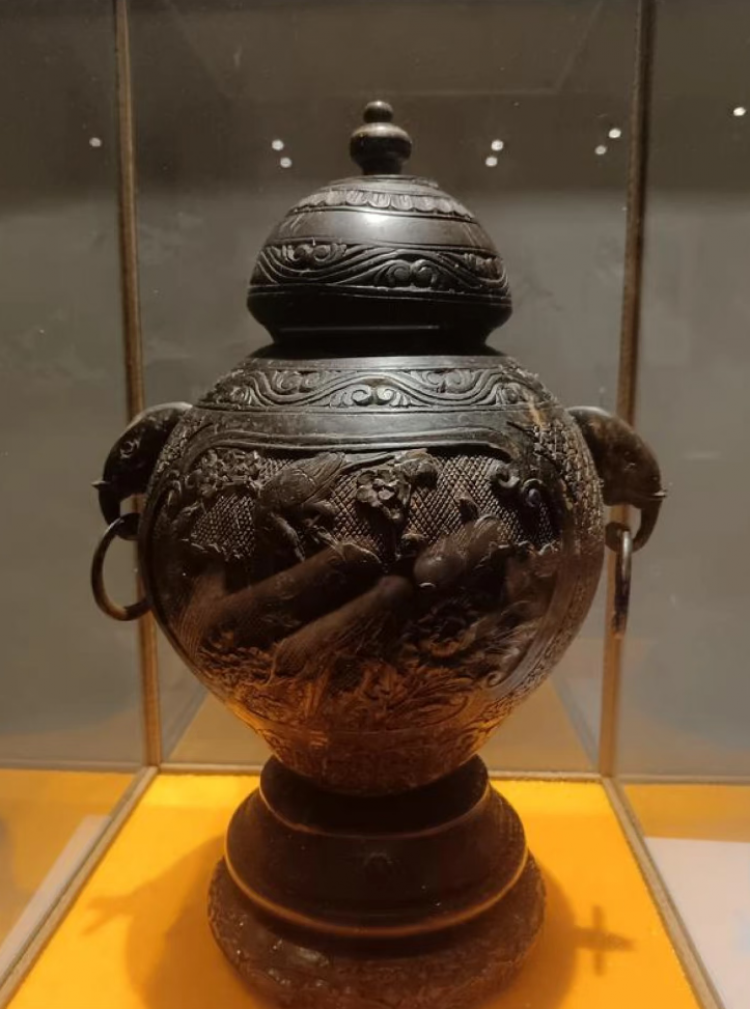
椰雕(海南椰雕),海南省海口市的传统美术,
国家级非物质文化遗产之一。
唐代即已出现关于海南椰雕的记载,
明清时期椰雕被作为珍品进贡朝廷,赢得“天南贡品”之誉。
20世纪中叶以来,
椰雕技艺在继承传统的基础上又有了新的提高。
椰雕(海南椰雕)一般经过设计、选材、开料、雕镂、
造胎(铜或锡质等)、镶嵌、修饰或打磨、上漆或贴金、
装饰(配套)等工序。
Traditional Art of Haikou City, Hainan Province
Coconut Carving (Hainan Coconut Carving) is a traditional art form in Haikou City, Hainan Province,
One of the national intangible cultural heritages.
There were already records of Hainan coconut carvings in the Tang Dynasty,
During the Ming and Qing dynasties, coconut carvings were presented as treasures to the court and earned the reputation of a "tribute to the south of the world".
Since the mid-20th century,
The coconut carving technique has made new improvements based on inheriting tradition.
Coconut carving (Hainan coconut carving) generally goes through design, material selection, cutting, and carving.
Tire making (copper or tin, etc.), inlaying, decorating or polishing, painting or gilding
Decoration (supporting) and other processes.

2007年7月23日,
椰雕(海南椰雕)入选第二批海南省级非物质文化遗产名录。2008年6月7日,
椰雕(海南椰雕)经中华人民共和国国务院
批准列入第二批国家级非物质文化遗产名录。
On July 23, 2007,
Coconut Carving (Hainan Coconut Carving) has been included in the second Hainan Provincial Intangible Cultural Heritage List batch. On June 7th, 2008,
Coconut Carving (Hainan Coconut Carving) by the State Council of the People's Republic of China
Approved for inclusion in the second batch of the national intangible cultural heritage list.


二,起源与历史
Origin and History
海南椰雕是中国传统工艺的瑰宝,
其历史可追溯至唐代。
唐代诗人陆龟蒙在诗句中提及“椰杯消毒雾”,
印证椰壳制品至少已有1100余年的使用历史。
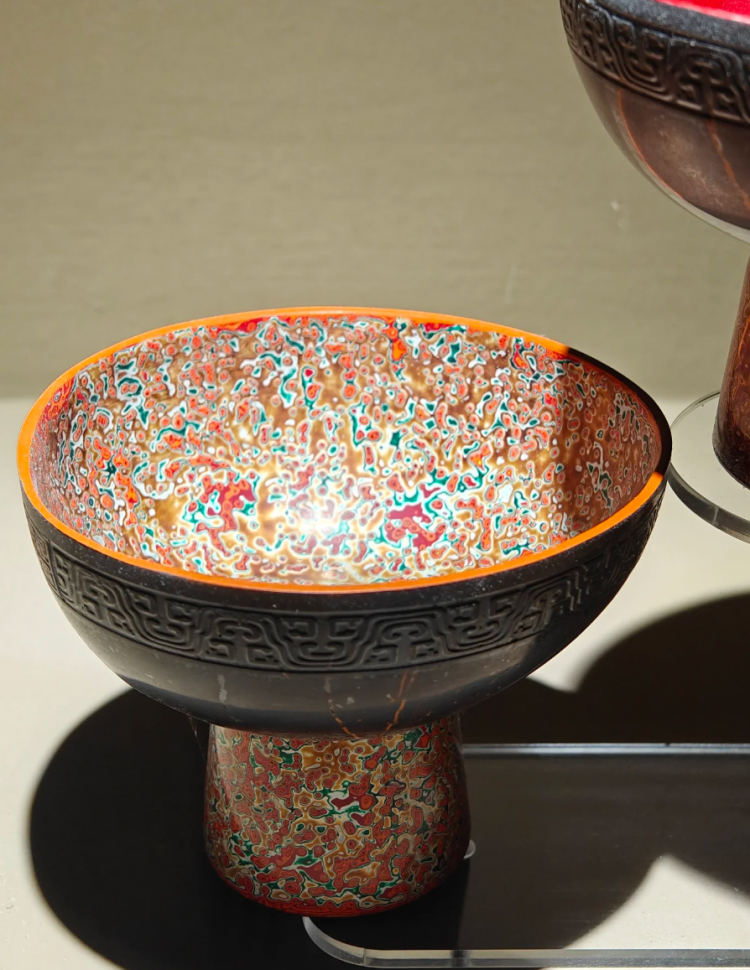
宋代时,椰碗、椰杯、椰壶等器物成为士大夫阶层的宴席雅器,奠定了椰雕的工艺基础。明清时期,
椰雕因技艺精湛被列为贡品,赢得“天南贡品”之誉,
清代雍正年间已形成成熟的雕刻技法与器物造型。
清末民初,海南椰雕作坊兴盛,
宝生祥号、诒记等商号推动椰雕走向商业化,
产品远销南洋与欧洲。20世纪中叶经历战乱后,
椰雕在公私合营政策下重焕生机,海口、文昌等地成立工艺厂,形成规模化生产。


Hainan coconut carving is a treasure of traditional Chinese craftsmanship,
Its history can be traced back to the Tang Dynasty.
The Tang Dynasty poet Lu Guimeng mentioned "coconut cup disinfectant mist" in his poetry,
Lb vaatlnwub that coconut shell products have a usage history of at least 1100 years.
During the Song Dynasty, utensils such as coconut bowls, cups, and pots became the elegant banquet utensils of the literati class, laying the foundation for the craft of coconut carving. During the Ming and Qing dynasties,
Coconut carving has been listed as a tribute due to its exquisite craftsmanship, earning the reputation of being a tribute to the south of China,
During the Yongzheng reign of the Qing Dynasty, mature carving techniques and object shapes had already been formed.
In the late Qing Dynasty and early Republic of China, Hainan coconut carving workshops flourished,
Baoshengxiang, Yiji and other businesses are promoting the commercialization of coconut carving,
The products are exported to Southeast Asia and Europe. After experiencing wars in the mid-20th century,
Coconut carving has regained vitality under the public-private partnership policy, and craft factories have been established in places such as Haikou and Wenchang, forming large-scale production.
三,制作工艺
Production process

海南椰雕制作要经过选料、造模、雕刻、通花、嵌镶、
刨光、修饰等几道工序。
椰雕的工艺,首先得从选料开始。
要挑选颜色、硬度、厚度都相近的椰子,
艺人们靠着经验和眼力,
能透过包裹在外的椰棕判断出椰壳的形状、色泽、
厚度、硬度等。
接下来,根据椰壳形状设计要雕刻的作品。
如果是雕刻椰妹、猴子之类的,就需要保留外层厚厚的椰棕。
这时,割棕就成了关键的一个环节。
然后是造模和拼接。造模就是将椰壳在车床上车出想要的形状。而拼接环节也有讲究,就是将椰壳切割成一片一片,
随后黏合在一起。
有时会在拼接前先做一个模,有时就直接拼接,
这当中要克服一个拼合产品易热胀冷缩的问题。
除了原汁原味的青壳雕外,
椰雕也和其他雕刻材料和工艺结合在一起,
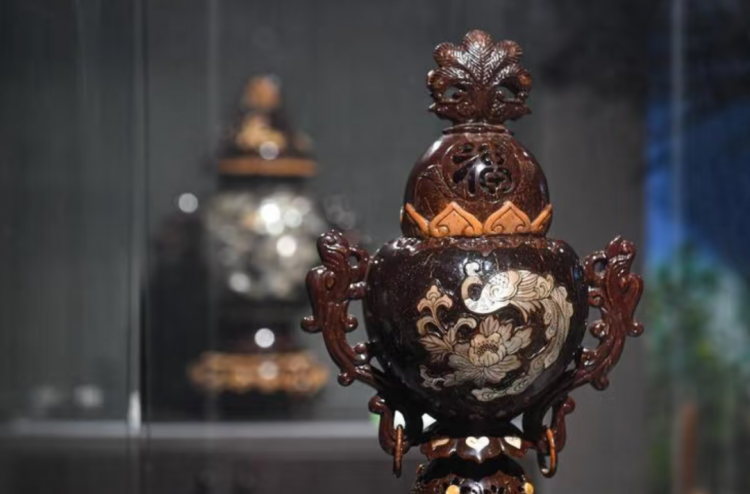
创造出不同的另类之美,比较常见的有镶锡、镶银、贝雕镶嵌、石膏镶嵌、檀木嵌镶、陶瓷拼贴等。
最后一道工序是上油,
在椰雕上涂上一层植物油等材料加以保护。
一般上油三五年后,再加工一遍,椰雕作品才算基本定型,
这样的作品才算完成。
The production of Hainan coconut carving involves selecting materials, making moulds, carving, threading, and inlaying.
Several processes such as planning and decoration.
The craft of coconut carving begins with the selection of materials.
To choose coconuts with similar colour, hardness, and thickness,
Artists rely on their experience and vision,
The shape and colour of the coconut shell can be determined by the coconut palm wrapped around it.
Thickness, hardness, etc.
Next, design the artwork to be carved based on the shape of the coconut shell.
If it is carving coconut girls, monkeys, etc., it is necessary to preserve the thick outer layer of coconut palm.
At this point, brown cutting becomes a crucial step.
Then there is moulding and splicing. Modelling is the process of taking coconut shells onto a lathe to create the desired shape. And the splicing process also requires attention to detail, which is cutting the coconut shell into pieces,
Then they were glued together.
Sometimes a mould is made before splicing, and sometimes it is directly spliced,
We need to overcome the problem of easy thermal expansion and contraction of assembled products.
In addition to the authentic green shell carving,
Coconut carving is also combined with other carving materials and techniques,
Creating different alternative beauties, common ones include tin inlay, silver inlay, shell carving inlay, gypsum inlay, sandalwood inlay, ceramic collage, etc.
The final process is oiling,
Apply a layer of vegetable oil or other materials on the coconut sculpture for protection.
Generally, after being oiled for three to five years, coconut carvings are processed again before they are considered to have taken shape,
This kind of work is considered complete.
1. 原料与分类
椰雕以椰壳、椰木、椰棕为原料,分为三大类:
椰壳雕:以椰壳为载体,通过雕刻、打磨制成器皿或摆件,
兼具实用性与观赏性;
椰木雕:
利用椰树木材雕刻家具、建筑构件等,风格古朴厚重;
椰棕雕:
以椰棕纤维编织或雕刻工艺品,展现自然材料的肌理美。
1. Raw materials and classification
Coconut carvings are made from coconut shells, coconut wood, and coconut palm, and are divided into three categories:
Coconut shell carving: Using coconut shells as a carrier, carving and polishing them into vessels or ornaments,
Combining practicality and aesthetics;
Coconut wood carving:
Using coconut tree wood to carve furniture, building components, etc., with a rustic and heavy style;
Coconut Palm Carving:
Using coconut palm fibre weaving or carving crafts to showcase the texture and beauty of natural materials.

2. 核心技法
椰雕技法历经千年演变,形成多元化的雕刻体系:
浮雕:
包括高浮雕、浅浮雕,突出图案的立体感,常见于明清贡品;
镂空雕:
通过单层或多层镂刻展现繁复纹样,多用于精致器物;
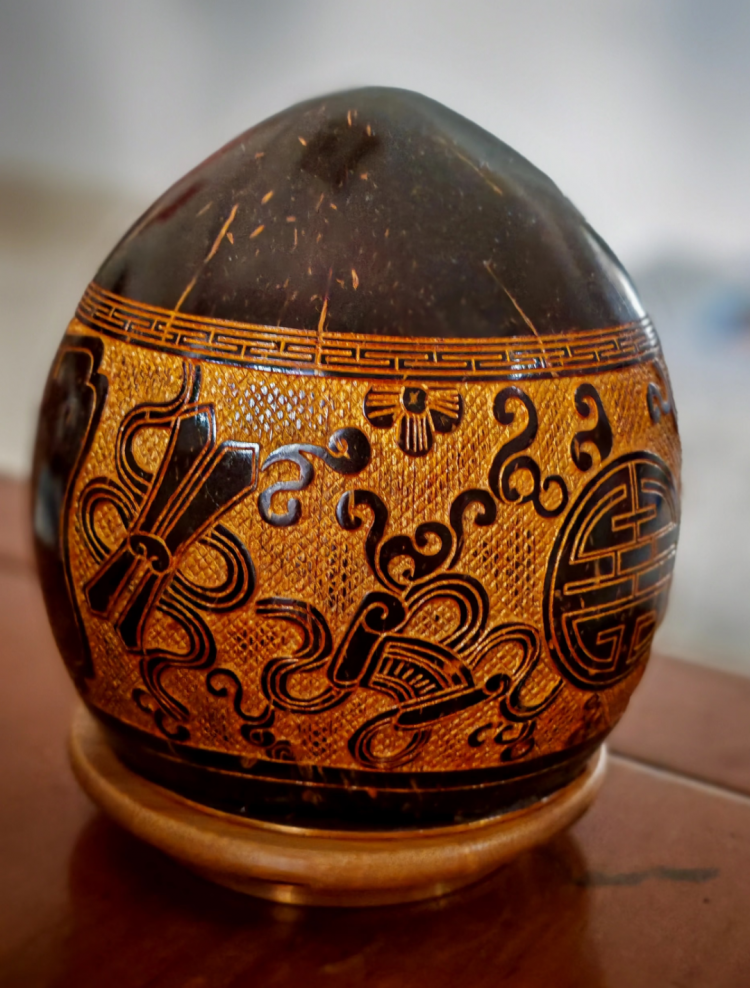
线刻与阴刻:
以刀代笔勾勒线条,清代后期结合诗文书法,增添文人意趣;
镶嵌与割棕:
20世纪创新工艺,将贝壳、金属与椰壳结合,
或利用椰棕纹理创作浮雕。
2. Core Techniques
Coconut carving techniques have undergone thousands of years of evolution, forming a diverse carving system:
Relief:
Including high relief and shallow relief, highlighting the three-dimensional sense of patterns, commonly seen in Ming and Qing tribute;
Hollow carving:
Displaying intricate patterns through single-layer or multi-layer engraving, often used for delicate objects;
Line engraving and shadow engraving:
Using a knife instead of a pen to outline lines, combined with poetry, calligraphy, and literature in the late Qing Dynasty, to add literary interest;
Inlaying and Brown Cutting:
In the 20th century, innovative craftsmanship combined shells, metals, and coconut shells,
Or use coconut palm texture to create reliefs.

3. 艺术特征
实用与审美结合:
既有茶具、灯具等日用品,也有山水人物题材的观赏品;
地域文化符号:
图案多取材于海南热带风光、黎族民俗及神话传说,
如《椰风海韵》《蓬勃》等作品;
古朴典雅风格:
漆金工艺与椰壳原色相映,体现“大巧若拙”的东方美学。
3. Artistic features
Combining practicality and aesthetics:
There are both daily necessities such as tea sets and lighting fixtures, as well as decorative items featuring landscapes and figures;
Regional cultural symbols:
The patterns are often inspired by the tropical scenery of Hainan, the customs of the Li ethnic group, and mythological legends,
Works such as "Coconut Wind and Sea Rhyme" and "Flourishing";
Ancient and elegant style:
The lacquer gold craftsmanship and the original colour of coconut shells complement each other, reflecting the Eastern aesthetic of 'great craftsmanship is as simple as a fool'.


四,艺术价值
Artistic Value

椰雕不仅是工艺载体,更是海南文化的象征:
历史见证:
从唐代贡品到现代国礼,椰雕记录了中国海上丝绸之路的贸易史;
生态智慧:
体现海南人“物尽其用”的生存哲学,将普通椰壳转化为艺术珍品;
国际名片:
20世纪出口南洋、欧洲,当代通过博览会、文化交流活动传播海南文化。
Coconut carving is not only a carrier of craftsmanship but also a symbol of Hainan culture:
Historical witness:
From Tang Dynasty tribute to modern national rituals, coconut carvings recorded the trade history of China's Maritime Silk Road;
Ecological wisdom:
Reflecting the survival philosophy of "making the best use of everything" of Hainanese people, transforming ordinary coconut shells into artistic treasures;
International business card:
In the 20th century, Hainan culture was exported to Southeast Asia and Europe, and in contemporary times, it is spread through exhibitions and cultural exchange activities.

五,传承与发展
Inheritance and Development


就业价值
在椰壳、椰木和椰棕上施刻,成本低廉,可以变废为宝,
体现物尽其用的原则。海南椰雕相关技艺易于普及,
较适合作为家庭手工劳动项目进行推广,
以增加农民的经济收入,解决社会就业问题。
工艺价值
海南椰雕技艺精湛、色调古朴优美、造型新颖,
富有浓厚的海南特色。
海南椰雕价值的高低主要由其制作工艺决定,
制作工艺越复杂,价值越高,
如使用浮雕、圆雕等复杂工艺的椰雕收藏价值较高。
Employment value
Carving on coconut shells, coconut wood, and coconut palm is low-cost and can turn waste into treasure,
The principle of maximizing the use of resources. Hainan coconut carving-related skills are easy to popularize,
More suitable for promotion as a household manual labour project,
To increase the economic income of farmers and solve the problem of social employment.
Process value
Hainan coconut carving has exquisite craftsmanship, ancient and beautiful colour tones, and novel shapes,
Rich in strong Hainan characteristics.
The value of Hainan coconut carving is mainly determined by its production process,
The more complex the production process, the higher the value,
Coconut carvings made using complex techniques such as relief carving and round carving have high collection value.


经济价值
对海南椰雕的创新设计及开发,
既符合非物质文化遗产的活态传承需要,
又能满足旅游工艺产品的市场需求,
有助于进一步推动地方文化创意产业和旅游产业的发展,
具有重要的社会效益和经济价值。
传承状况
随着时代的变迁,人们的生产生活方式随之改变,
消费市场的减弱甚至消失直接威胁到非物质文化遗产传承人的生存,很多传承人放弃了对非物质文化遗产的传承,
椰雕技艺也因失去了实际效用而逐步走向衰落。
economic value
Innovative design and development of Hainan coconut carving,
It meets the needs of the active inheritance of intangible cultural heritage,
It can also meet the market demand for tourism craft products,
Helps to further promote the development of local cultural and creative industries, as well as the tourism industry,
Has significant social benefits and economic value.
Inheritance status
With the changes of the times, people's production and lifestyle have also changed,
The weakening or even disappearance of the consumer market directly threatens the survival of inheritors of intangible cultural heritage, and many inheritors have given up their inheritance of intangible cultural heritage,
The coconut carving technique has gradually declined due to the loss of practical utility.

版权声明:【除原创作品外,本平台所使用的文章、图片、视频及音乐属于原权利人所有,因客观原因,或会存在不当使用的情况,如,部分文章或文章部分引用内容未能及时与原作者取得联系,或作者名称及原始出处标注错误等情况,非恶意侵犯原权利人相关权益,敬请相关权利人谅解并与我们联系及时处理,共同维护良好的网络创作环境,联系邮箱:603971995@qq.com】


