


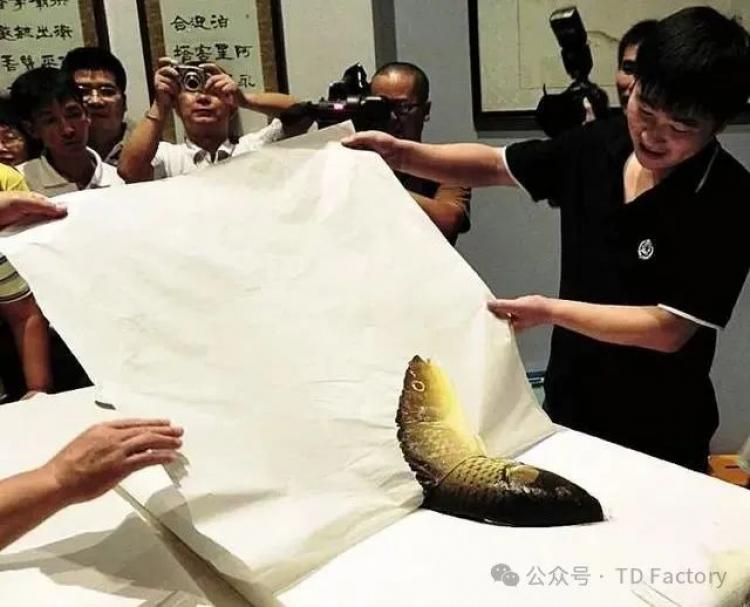
“以墨色为鳞、宣纸作水,将游鱼的灵动瞬间拓印成永恒的水墨生命诗篇。”
With ink as the scales and rice paper as the water, the lively moments of the swimming fish are imprinted into an eternal poem of life in ink.

在宣纸与墨香交织的世界里,有一种技艺能让转瞬即逝的生命以另一种形态永恒留存 —— 鱼拓。当鲜活的游鱼轻吻宣纸,墨色在鳞片间晕染出独特的纹理,一幅承载着自然灵性与匠人匠心的艺术作品便悄然诞生。鱼拓,这门跨越千年的古老技艺,不仅是对生命形态的忠实记录,更是东方美学与人文精神的具象表达。
In a world where Xuan paper and the aroma of ink interweave, there is a technique that can preserve fleeting lives in another form for eternity - fish rubbing. When the lively fish gently kisses the rice paper, the ink colour spreads out unique textures among the scales, and an artistic work that carries the spirituality of nature and the ingenuity of the artisan is quietly born. Fish rubbing, an ancient craft that has spanned a thousand years, is not only a faithful record of life forms but also a concrete expression of Eastern aesthetics and humanistic spirit.
#01
··历史渊源··
Historical origin
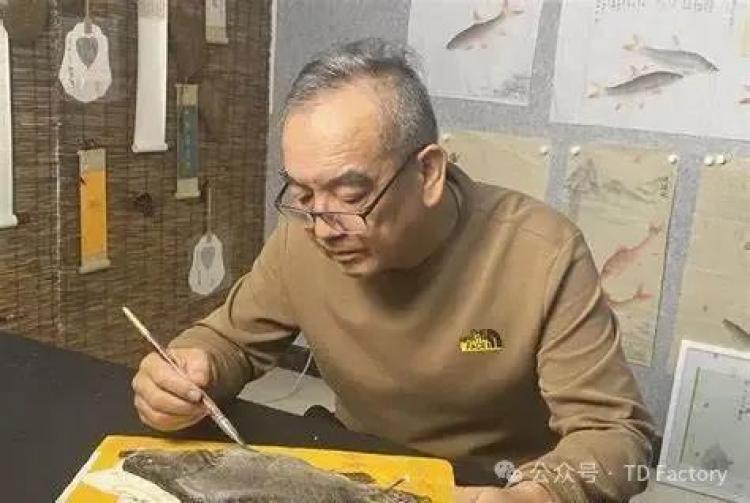
鱼拓的起源可追溯至中国宋代,那时的文人墨客常以 “鱼” 为题材抒发情感,而鱼拓作为一种独特的艺术形式,悄然萌芽。早期的鱼拓主要用于记录渔获,渔民们将捕获的大鱼洗净后,用墨汁涂抹鱼身,再覆盖宣纸拓印,以此记录丰收的喜悦与渔获的珍贵。这种质朴的记录方式,虽以实用为初衷,却在不经意间开启了艺术创作的新路径。
The origin of fish rubbing can be traced back to the Song Dynasty in China. At that time, scholars and literati often used "fish" as the subject to express their emotions. As a unique art form, fish rubbing quietly emerged. In the early days, fish rubbings were mainly used to record catches. Fishermen would wash the big fish they had caught, apply ink to their bodies, and then cover them with rice paper to make rubbings, thereby recording the joy of a bountiful harvest and the preciousness of the catch. This simple way of recording, although originally intended for practicality, has inadvertently opened up a new path for artistic creation.
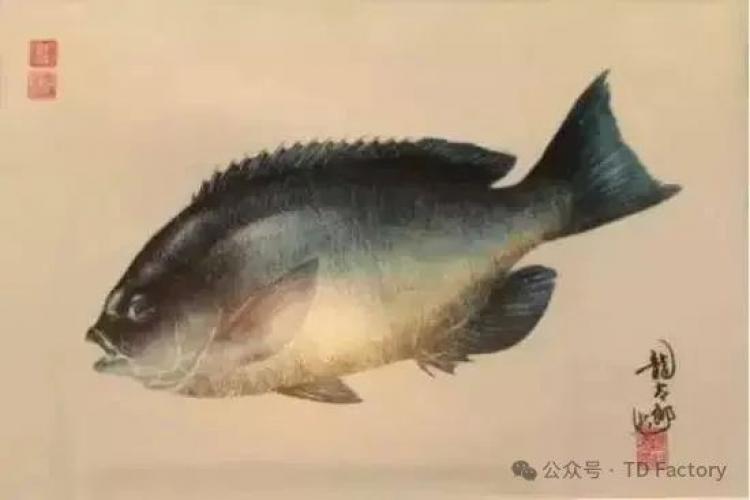
相传鱼拓起源于我国宋代,元代因战乱曾失传多年,后来在沿海地区再度流传,并辗转传播到日本、朝鲜、韩国。清末时期历经几代人的传承与创新,活态传承至今。安徽界首鱼拓代表性传承人胡继江老师在承袭传统墨拓的基础上,借鉴运用现代绘画颜料,融合了中国传统绘画元素和审美理念,所创作的作品丰富和拓展了墨色与彩色相融合的鱼拓文化内涵。
It is said that fish rubbings originated in the Song Dynasty of China. Due to wars in the Yuan Dynasty, they were lost for many years. Later, they were reintroduced in coastal areas and spread to Japan, Korea and South Korea. After several generations of inheritance and innovation during the late Qing Dynasty, it has been passed down in a living way to this day. Mr. Hu Jijiang, a representative inheritor of Jieshou fish rubbing in Anhui Province, based on inheriting traditional ink rubbing, has drawn on and applied modern painting pigments, integrating traditional Chinese painting elements and aesthetic concepts. The works he has created have enriched and expanded the cultural connotation of fish rubbing that combines ink and colour.
#02
·· 制作工艺 ··
Production technology
鱼拓技艺看似简单,实则蕴含着极高的技术难度与艺术追求。从准备材料到完成作品,每一个环节都需要创作者全神贯注、精心雕琢。
The fish rubbing technique may seem simple, but in fact, it involves extremely high technical difficulty and artistic pursuit. From preparing materials to completing the work, every step requires the creator to be fully concentrated and meticulous crafted.
1、准备材料
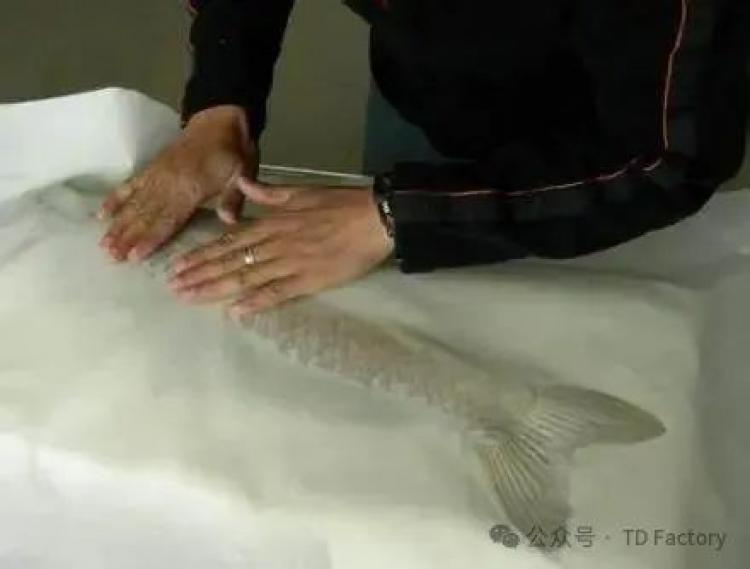
材料准备。一张优质的宣纸是鱼拓作品的基础,其细腻的质地能够完美呈现鱼的鳞片纹理;特制的油墨或颜料需具备良好的附着力与色彩表现力,确保拓印后的图案清晰、色彩鲜艳;此外,还需要大小不同的刷子、海绵、喷枪等工具,用于涂抹颜料和调整细节。而作为创作主体的鱼,更是关键所在。新鲜、完整的鱼能够最大程度保留自然形态与细节,为作品奠定良好基础。
Material preparation. A high-quality Xuan paper is the foundation of fish rubbing works, and its fine texture can perfectly present the scale patterns of fish. The specially made ink or pigment should have good adhesion and colour expressiveness to ensure that the pattern after rubbing is clear and the colour is bright. In addition, tools of different sizes such as brushes, sponges and spray guns are also needed for applying paint and adjusting details. And the fish, as the creative subject, is even more crucial. Fresh and intact fish can retain their natural form and details to the greatest extent, laying a good foundation for the work.
2、切割塑形
将选好的竹子和骨材切割成合适的大小和形状。竹子需经过多道工序,去除杂质、打磨光滑,制成薄片。骨材则要精心雕琢,使其厚度与竹子匹配,为后续的贴合做准备。
Cut the selected bamboo and aggregate it to the appropriate size and shape. The bamboo goes through several processes to remove impurities and smooth it into a thin sheet. The aggregate is carefully carved to match the thickness of the bamboo in preparation for subsequent bonding.
3、清洗鱼身
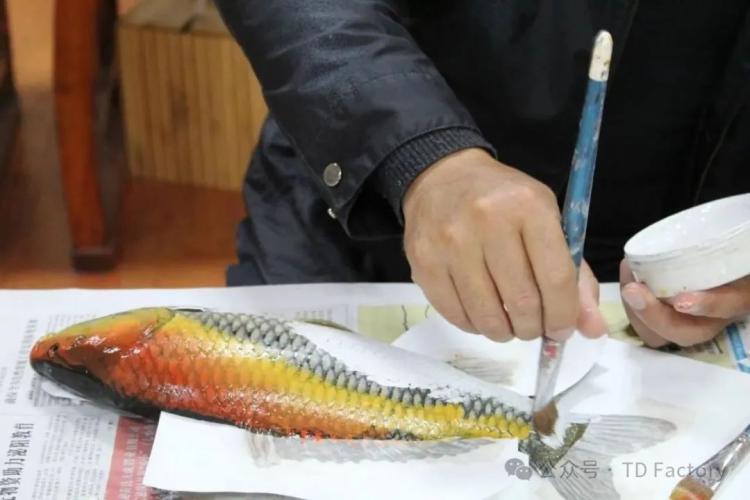
入正式的制作环节。第一步是清洗鱼身,将鱼身上的黏液、杂质彻底洗净,确保拓印时颜料能够均匀附着。接着,根据创作需求调配颜料,这一步需要创作者对鱼的色彩有敏锐的观察力和精准的把控力。调配好颜料后,用刷子或海绵小心翼翼地将颜料涂抹在鱼身上,从鱼头到鱼尾,每一片鳞片都要细致覆盖,力求还原鱼的自然色彩与光影变化。
Enter the formal production stage. The first step is to clean the fish's body, thoroughly washing away the mucus and impurities on it to ensure that the pigment adheres evenly during the rubbing process. Next, mix the pigments according to the creative requirements. This step demands that the creator have a keen sense of observation and precise control over the colours of the fish. After mixing the paint, carefully apply it to the fish with a brush or sponge, from the head to the tail. Every scale should be meticulously covered to restore the natural colour and light and shadow changes of the fish.
4、涂抹颜料
涂抹完颜料,最关键的拓印环节来临。将宣纸轻轻覆盖在鱼身上,用手或工具从鱼身中央向四周轻轻按压,使颜料充分转移到宣纸上。这一过程需掌握好力度,力度过轻会导致图案不清晰,力度过重则可能损坏鱼身或宣纸。拓印完成后,小心揭开宣纸,一条栩栩如生的鱼便跃然纸上。但此时作品尚未完成,创作者还需通过添加眼睛、鳍等细节,以及背景渲染等手法,进一步提升作品的艺术效果。
After applying the paint, the most crucial rubbing step arrives. Gently cover the fish with rice paper and press it from the centre to the sides with your hand or a tool to ensure that the pigment is fully transferred onto the rice paper. This process requires a good grasp of the force. If the force is too light, the pattern will be unclear; if it is too heavy, it may damage the fish's body or the rice paper. After the rubbing is completed, carefully lift the rice paper, and a lifelike fish will appear on the paper. However, at this point, the work is not yet completed. The creator still needs to further enhance the artistic effect of the work by adding details such as eyes and fins, as well as background rendering and other techniques.
在鱼拓制作过程中,每一次颜料的涂抹、每一次宣纸的按压,都是创作者与鱼的一场无声对话。他们用指尖的温度,赋予冰冷的材料以生命的温度,将转瞬即逝的鲜活瞬间定格成永恒的艺术之美。
During the process of making fish rubbings, every application of pigment and every press of Xuan paper is a silent dialogue between the creator and the fish. With the warmth of their fingertips, they endow the cold materials with the warmth of life, freezing the fleeting, vivid moments into eternal artistic beauty.
#03
··独特魅力··
Unique charm
鱼拓作品不仅是对鱼的外形的真实再现,更承载着丰富的文化内涵与精神寓意。在中国传统文化中,“鱼” 与 “余” 谐音,象征着富足、有余,寄托着人们对美好生活的向往与期盼。鱼拓作品中灵动的鱼形,传递出吉祥如意、年年有余的美好祝福,深受大众喜爱。
Fish rubbing works are not only true reproductions of the appearance of fish, but also carry rich cultural connotations and spiritual implications. In traditional Chinese culture, "fish" sounds similar to "surplus" in Chinese, symbolising abundance and surplus, and embodying people's yearning and anticipation for a better life. The lively fish shapes in fish rubbing works convey the good wishes of good fortune and abundance every year, and are deeply loved by the public.
同时,鱼拓还体现了人与自然和谐共生的理念。每一幅鱼拓作品的诞生,都是对生命的一次致敬与记录。创作者通过鱼拓技艺,将自然界中的生命之美以艺术的形式保存下来,让人们在欣赏作品的同时,感受到大自然的神奇与伟大,从而唤起对生态环境的保护意识。
Meanwhile, fish rubbings also embody the concept of harmonious coexistence between humans and nature. The birth of every fish rubbing work is a tribute and record of life. Through the fish rubbing technique, the creator preserves the beauty of life in nature in an artistic form, allowing people to feel the magic and greatness of nature while enjoying the works, thereby awakening the awareness of protecting the ecological environment.
此外,鱼拓也是一种情感的载体。对于钓鱼爱好者来说,鱼拓作品记录着他们与大鱼博弈的难忘瞬间,承载着胜利的喜悦与对自然的敬畏;对于艺术家而言,鱼拓是他们表达创作理念、传递艺术情感的独特媒介;而对于普通人,鱼拓作品则是装点生活、传递美好祝愿的艺术佳品。
In addition, fish rubbings are also a carrier of emotions. For fishing enthusiasts, fish rubbing works to record the unforgettable moments when they compete with big fish, carrying the joy of victory and the awe of nature. For artists, fish rubbing is a unique medium for them to express their creative concepts and convey artistic emotions. For ordinary people, fish rubbing works are artistic masterpieces that embellish life and convey good wishes.
#04
··现状与传承··
Current situation and inheritance
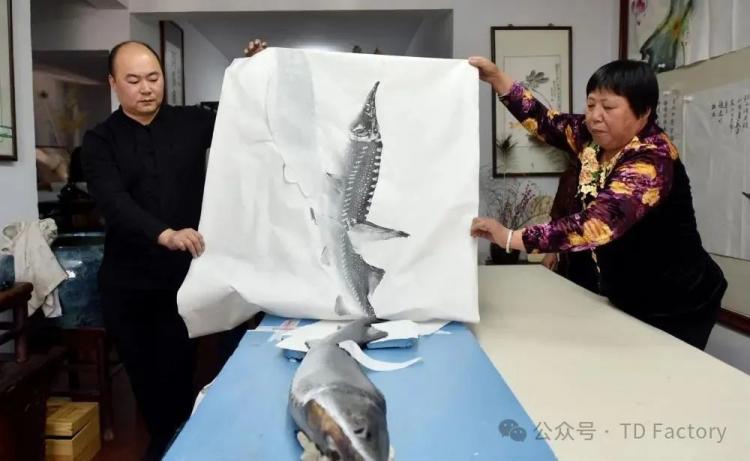
在现代社会快速发展的今天,鱼拓技艺面临着机遇与挑战并存的局面。一方面,随着人们生活水平的提高和对传统文化的关注度不断提升,越来越多的人开始认识并喜爱上鱼拓艺术,各类鱼拓展览、比赛层出不穷,为鱼拓技艺的传播与发展提供了广阔平台。
In today's rapidly developing modern society, the fish rubbing technique is facing a situation where opportunities and challenges coexist. On the one hand, with the improvement of people's living standards and the increasing attention paid to traditional culture, more and more people have begun to recognise and love the art of fish rubbing. Various fish rubbing exhibitions and competitions keep emerging, providing a broad platform for the dissemination and development of fish rubbing skills.
另一方面,鱼拓技艺的传承也面临着诸多困境。鱼拓制作过程复杂,对创作者的技术水平和艺术修养要求极高,培养一名优秀的鱼拓艺术家需要耗费大量时间和精力,导致愿意学习这门技艺的人相对较少。此外,现代科技的发展使得摄影、3D 建模等技术能够更加便捷、快速地记录物体形态,在一定程度上冲击了鱼拓这种传统手工技艺的生存空间。
On the other hand, the inheritance of fish rubbing techniques also faces many difficulties. The process of making a fish rubbing is complex and demands extremely high technical proficiency and artistic accomplishment from the creator. Cultivating an outstanding fish rubbing artist requires a great deal of time and energy, which leads to a relatively small number of people being willing to learn this skill. In addition, the development of modern technology has enabled techniques such as photography and 3D modelling to record the shapes of objects more conveniently and quickly, which, to a certain extent, has impacted the survival space of traditional handicrafts like fish rubbing.
同时,各地也纷纷开展鱼拓技艺培训、文化讲座等活动,走进校园、社区,向大众普及鱼拓知识,培养潜在的传承者和爱好者。通过这些努力,鱼拓技艺正逐渐打破传统的局限,以更加多元、开放的姿态融入现代生活。
Meanwhile, various regions have also been actively organising activities such as fish rubbing skills training and cultural lectures, entering schools and communities to popularise fish rubbing knowledge among the public and cultivate potential inheritors and enthusiasts. Through these efforts, the fish rubbing technique is gradually breaking through the limitations of tradition and integrating into modern life more diversely and openly.
一纸拓痕,千年游鳞。鱼拓技艺跨越时空的长河,从古代渔民的质朴记录,发展成为独具魅力的艺术瑰宝。它不仅是对生命形态的精妙复刻,更是东方美学与文化精神的生动诠释。在未来的日子里,愿这门古老而又充满活力的技艺,继续在岁月的长河中悠然畅游,绽放出更加绚烂的光彩,让更多人领略到其独特的艺术魅力与深厚的文化底蕴。
In the fast-paced modern life, bamboo bone mahjong is like a fresh spring, bringing us a moment of peace and pleasure. It is not only a tool of entertainment, but also a cultural heritage, which deserves our careful attention and inheritance. Let us pick up this exquisite bamboo bone mahjong, feel the charm of history in the game, and enjoy the charm of traditional culture.
版权声明:【除原创作品外,本平台所使用的文章、图片、视频及音乐属于原权利人所有,因客观原因,或会存在不当使用的情况,如,部分文章或文章部分引用内容未能及时与原作者取得联系,或作者名称及原始出处标注错误等情况,非恶意侵犯原权利人相关权益,敬请相关权利人谅解并与我们联系及时处理,共同维护良好的网络创作环境,联系邮箱:603971995@qq.com】


